
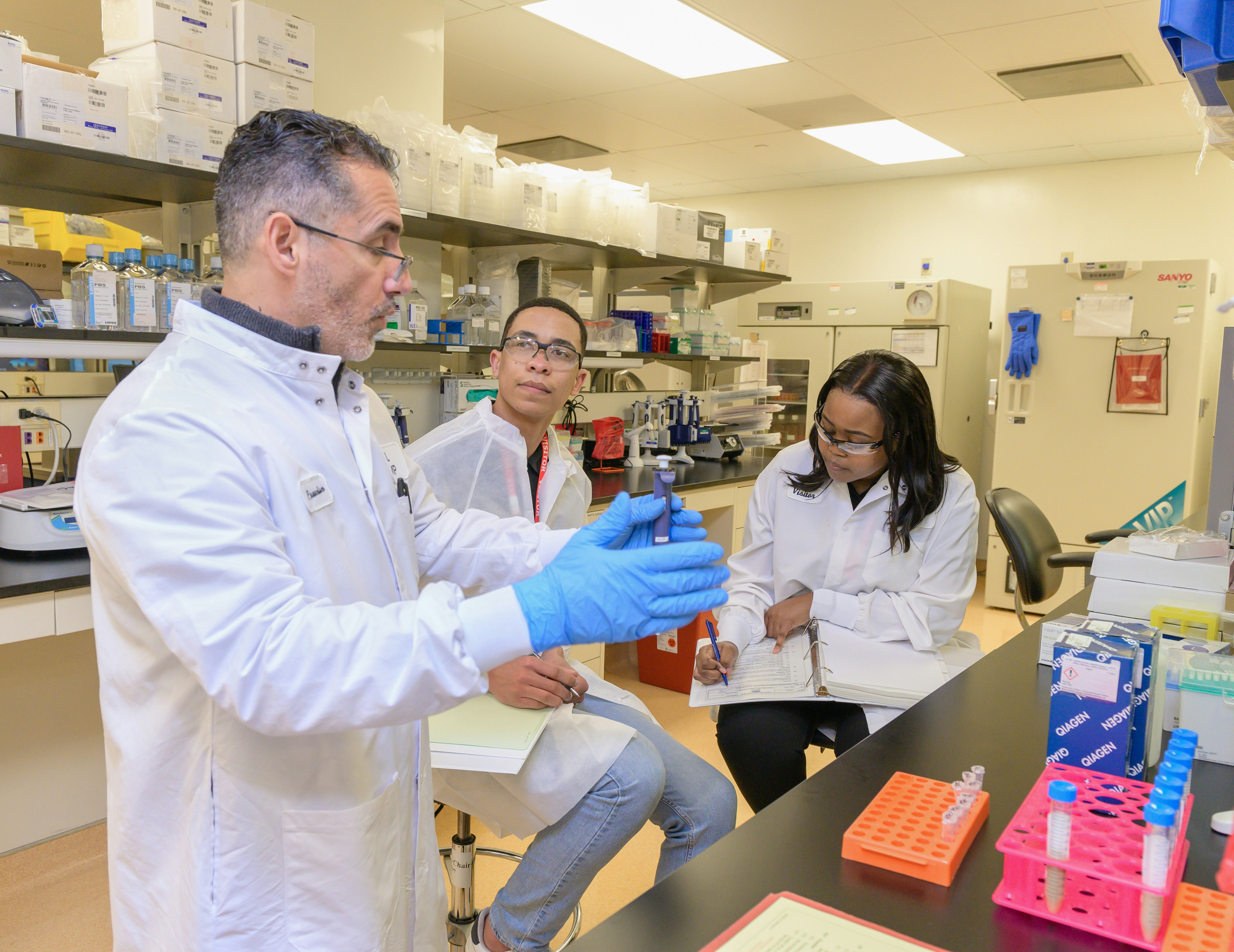
Research bias is one of the most important concepts every student and researcher must understand. Even well-designed studies can produce misleading results if bias is not identified and controlled. At its core, research bias refers to any systematic deviation from the truth that affects the accuracy, validity, and reliability of findings. Bias can occur at any stage of the research process, from data collection to analysis, interpretation, and even publication. While it is nearly impossible to eliminate bias completely, understanding its different forms allows you to minimise its impact and produce more credible research.
Table of Contents
- What Is Research Bias?
- Why Research Bias Matters
- Major Types of Research Bias
- Information and Measurement Bias
- Response Bias and Survey Bias
- Selection Bias in Research
- Publication and Researcher Bias
- How to Minimise Bias in Research
- Frequently Asked Questions (FAQs)
What Is Research Bias?
Research bias occurs when there is a systematic error in the design, execution, or analysis of a study that leads to distorted findings or incorrect conclusions.
Bias can affect:
- What data is collected
- How data is measured
- How results are interpreted
- Which findings are reported
It can appear in both qualitative and quantitative research, often unintentionally.
Why Research Bias Matters
Understanding research bias is essential for producing high-quality academic work.
Key reasons include:
- Bias reduces the validity of findings
- It can lead to incorrect conclusions and poor decision-making
- It affects the reliability and reproducibility of research
- It can misrepresent real-world phenomena
Importantly, bias is present in all research to some degree. The goal is not perfection, but awareness and control.
Major Types of Research Bias
Research bias takes many forms. Below are some of the most important and commonly encountered types, along with clear explanations and examples.
Actor–Observer Bias
Actor–observer bias occurs when individuals attribute their own behaviour to external factors, while attributing others’ behaviour to internal characteristics.
Example:
In a study on driving behaviour, a participant may blame their own mistake on poor weather but describe another driver’s similar mistake as reckless or careless.
Why it matters:
This bias can distort self-reported data and lead to inaccurate interpretations of behaviour.
Confirmation Bias
Confirmation bias is the tendency to search for, interpret, or prioritise information that supports existing beliefs while ignoring contradictory evidence.
Example:
A researcher studying family separation may emphasise findings that align with their personal experiences while overlooking alternative perspectives.
Why it matters:
It leads to selective analysis and weakens objectivity in research.
Information (Measurement) Bias
Information bias occurs when data is inaccurately measured, recorded, or classified. It often arises during data collection.
Common Types of Information Bias
Type | Description | Example |
| Recall Bias | Errors due to inaccurate memory | Participants misreport past behaviours |
| Observer Bias | Researcher expectations influence observations | Recording what is expected instead of what occurs |
| Performance Bias | Unequal treatment of groups | Participants change behaviour when aware of study |
| Regression to the Mean | Extreme values move toward average over time | Apparent improvement without real intervention |
Example:
Students self-reporting smartphone usage may overestimate or underestimate their actual screen time.
Recall Bias
Recall bias occurs when participants are asked to remember past events, leading to inaccurate or incomplete data.
Example:
Parents recalling their child’s diet over several years may provide inconsistent or biased responses.
How to reduce it:
- Use shorter recall periods
- Validate responses with objective data where possible
Observer Bias
Observer bias arises when researchers interpret data based on expectations or prior beliefs.
Example:
Two researchers observing the same behaviour may record different outcomes due to differing assumptions.
Solution:
Use blinded study designs and standardised measurement tools.
Performance Bias
Performance bias occurs when participants alter their behaviour because they are aware they are being studied.
Example:
Participants in a diet study may change their eating habits simply because they know they are being observed.
Key concept:
This is closely related to the Hawthorne effect.
Response Bias
Response bias refers to situations where participants provide inaccurate or socially desirable answers.
Common Types of Response Bias
Type | Description |
| Social Desirability Bias | Respondents answer in a socially acceptable way |
| Acquiescence Bias | Tendency to agree with statements |
| Courtesy Bias | Avoiding negative responses to be polite |
| Question Order Bias | Earlier questions influence later responses |
| Extreme Responding | Choosing only extreme options |
Example:
A student may deny cheating in an exam survey because it is socially unacceptable.
Interviewer Bias
Interviewer bias occurs when the researcher’s tone, reactions, or identity influences participant responses.
Example:
An interviewer expressing enthusiasm about a topic may unintentionally encourage participants to provide similar responses.
Best practice:
Use neutral language and maintain consistent interaction.
Selection Bias
Selection bias occurs when the sample is not representative of the population.
Common Types of Selection Bias
Type | Description | Example |
| Sampling Bias | Non-random sample selection | Surveying only mall visitors |
| Attrition Bias | Dropouts affect results | Participants leaving a long study |
| Self-selection Bias | Volunteers differ from non-volunteers | Health-conscious individuals volunteering |
| Survivorship Bias | Ignoring failed cases | Studying only successful entrepreneurs |
| Nonresponse Bias | Non-respondents differ significantly | Missing working-age respondents |
| Undercoverage Bias | Excluding part of the population | Online surveys excluding non-internet users |
Publication Bias
Publication bias occurs when studies with positive or significant results are more likely to be published.
Example:
A researcher chooses not to publish results that show no effect.
Impact:
This creates a distorted body of evidence in academic literature.
Researcher Bias
Researcher bias occurs when a researcher’s beliefs influence study design, data collection, or interpretation.
Example:
Leading survey questions that reflect personal assumptions about a topic.
Solution:
- Use neutral wording
- Reflect on personal assumptions
- Apply rigorous methodology
How to Minimise Bias in Research
Although bias cannot be completely eliminated, it can be significantly reduced through careful planning and execution.
Practical Strategies
- Use random sampling and random assignment
- Design clear and neutral research questions
- Apply blinding in experiments where possible
- Use multiple data sources (triangulation)
- Track participant dropouts and analyse their impact
- Maintain a reflexive journal to monitor your own influence
- Validate findings using credible sources
A transparent methodology section is essential. Clearly explain how your design reduces potential bias.
Conclusion
Bias is an unavoidable part of research, but it does not have to undermine your work. Awareness is the first step toward control.
By understanding the different types of bias and actively working to minimise them, you can strengthen the credibility of your findings and contribute meaningful, reliable knowledge to your field.
Frequently Asked Questions (FAQs)
1. Why is bias in research a problem?
Bias distorts findings, reduces validity, and can lead to incorrect conclusions that affect decision-making and future research.
2. Can bias ever be completely eliminated?
No. Bias is inherent in research. However, it can be minimised through proper design, transparency, and critical reflection.
3. What is the difference between observer bias and actor–observer bias?
Observer bias relates to how researchers record or interpret data, while actor–observer bias refers to how individuals explain behaviour differently depending on perspective.
4. What is the difference between response bias and nonresponse bias?
Response bias occurs when participants provide inaccurate answers, while nonresponse bias occurs when certain groups do not respond at all.
5. How can I reduce bias in my research?
Use random sampling, neutral questions, multiple data sources, and transparent methods. Always reflect on your assumptions.
6. Does bias affect both qualitative and quantitative research?
Yes. Bias can occur in any type of research, regardless of methodology.
If you want to master research concepts, improve your academic writing, and learn how to produce high-quality, bias-aware research, we invite you to go further.
Join our community as a member today and gain access to expert insights, practical tools, and resources designed to help you succeed with confidence.




0 Comments